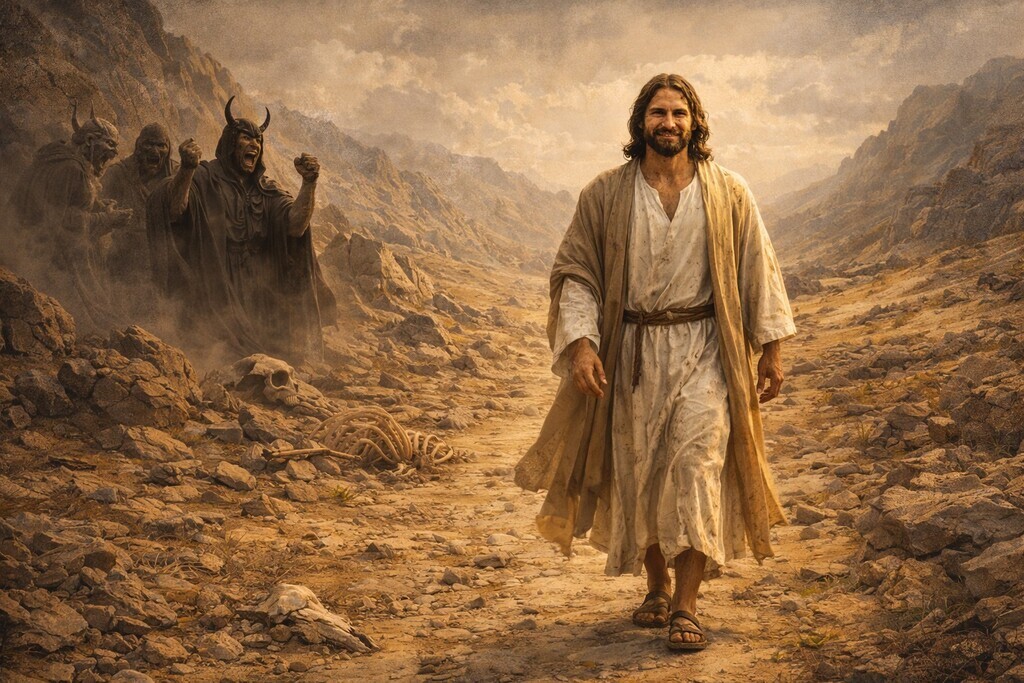
Most of what we know about Jesus’ teachings came after a pivotal moment in eschatological history, his baptism by John the Baptist in the Jordan River. After his baptism, he Immediately withdrew into the wilderness where he fasted for forty days. It was during that time he had his famous encounter with the devil; it was a time of testing, solitude, and spiritual preparation. After emerging from his experience in the desert, successful rejecting Satan, his ministry finally begins
First-century Judea was alive with voices; traveling teachers, prophets, and philosophers roamed from town to town, each with their own band of followers. They preached in marketplaces, debated in synagogues, and stirred conversations in temple courtyards. If they lived today, they might be more like our modern-day political or religious pod-casters or influencers, charismatic figures challenging the status quo with bold ideas and urgent warnings
I began to notice how religion was increasingly being entangled with politics. The outcome was predictable and divisive. Suddenly, to disagree with a particular political stance, you weren’t just branded unpatriotic but accused of obstructing some grand plan by God for the nation. The rhetoric reminded me of the historical tensions described in the gospels, where power, belief, and authority collided in ways that fractured communities. Pastors echo the words of politicians, elevating judgmental and divisive proclamations, as if they carried the ultimate truth, while the deeper spirit of humility and care seemed absent.
That was when I felt an undeniable pull to respond. Something inside me insisted that the message has been distorted, that the essence of what once inspired me was being overshadowed. The figure I had studied, the one whose words had stirred me decades earlier, was emphatic, compassionate, and unwavering in his concern for those society overlooked: the poor, the sick, the marginalized, the forgotten. To portray him otherwise felt like a betrayal of that legacy.
So here I am, writing these narratives and commentaries. Not to preach, not to defend dogma, but to offer clarity where I feel confusion has taken root. My aim is simple: to realign understanding with the original spirit of his message, to remind us that it's love at the core of that message, and to set things right in whatever small way I can.

We all know the classic Bible stories, the ones we grew up with. But what’s surprising is how many lesser‑known stories are tucked between the lines, and how even a few short verses can hold an entire world of meaning.

These are commentaries are mostly from reflections of thought from diligent wholehearted studies of the scriptures to determine what Jesus actually was teaching and what he really says about how he expects us to treat each other
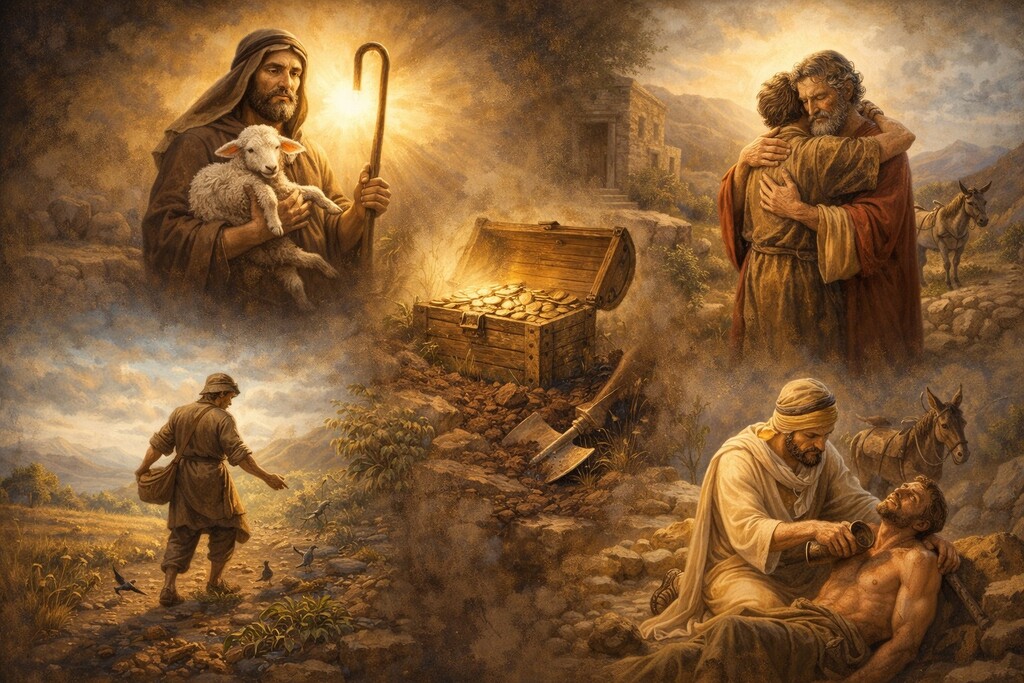
A parable is a short, simple story that uses everyday situations to reveal a deeper moral, spiritual, or philosophical truth. It’s not meant to entertain as much as it’s meant to make you think, the real message sits beneath the literal events.
“Declare his glory among the nations, his marvelous deeds among all peoples.” (Psalm 96:3)
Paul urged Timothy to ‘preach the word’ and to be ready to share it, whether the moment feels ‘convenient or not’ in 2 Timothy 4:2.
He warned that a time would come when people would no longer want the truth:
'For the time will come when they will not tolerate sound doctrine; but wanting to have their ears tickled, they will accumulate for themselves teachers in accordance with their own desires’ (2 Timothy 4:3).
He also reminded us that our real struggle isn’t against other people themselves, but against spiritual forces, “rulers, authorities, cosmic powers of darkness, and spiritual forces of evil in the heavenly realms” (Ephesians 6:12).
Jesus doesn’t want us to worry about that and said:
“You are the light of the world. A city on top of a hill can’t be hidden. Neither do people light a lamp and put it under a basket. Instead, they put it on top of a lampstand, and it shines on all who are in the house. In the same way, let your light shine before people, so they can see the good things you do and praise your Father who is in heaven.” (Matthew 5:14-16)
Paul said, we have our own weapons that have their own spiritual power:
‘Although we live in the world, we don’t fight our battles with human methods. Our weapons that we fight with aren’t human, but instead they are powered by God for the destruction of spiritual strongholds. They destroy arguments, and every defense that is raised up to oppose the knowledge of God.’ (2 Corinthians 10 3-5a)
Peter reminded us in his letter:
‘In your hearts revere Christ as Lord. Always be prepared to give an answer to everyone who asks you to give the reason for the hope that you have.’ (1 Peter 3:15)
And the last thing Jesus said to his disciples just before he ascended:
“You will receive power when the Holy Spirit has come upon you, and you will be my witnesses in Jerusalem, in all Judea and Samaria, and to the end of the earth.” (Acts 1:8)
maybe that’s what we should do...